I do not write this as an academic observer, a detached policy analyst, or a corporate sustainability consultant. I write as a personified fourth-generation survivor of a systematic genocide that the world tried to forget. My understanding of justice was not shaped in a classroom but at my grandmother’s feet in the expanse of Great Namaqualand. She was born from the violent sexual exploitation of a Nama woman by a German colonial settler during the German Empire's extermination campaign against my people. Through her stories, I inherited an unyielding obligation to speak.
Those stories taught me that colonialism does not end when the guns fall silent. It evolves, changing its vocabulary, swapping military uniforms for corporate suits, and crafting sophisticated economic instruments, all while preserving the unequal power relationships that first dispossessed Indigenous peoples of their lands.
Today, global governments and multilateral institutions assert that humanity stands at a major crossroads. Faced with an existential climate crisis, the world is racing toward rapid decarbonisation. Green hydrogen, renewable energy megaprojects, and net-zero economies are presented as humanity’s pathway to survival. Like every Indigenous mother, daughter, and granddaughter, I desire a healthy planet for generations yet unborn. But as the global North positions itself as the saviour of the biosphere, I am forced to ask a single, recurring question: For whom?
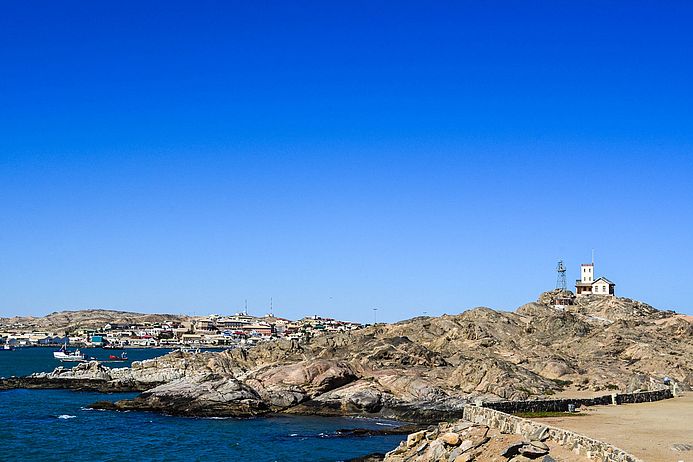
The German renewable energy company ENERTRAG, alongside its partners in the Hyphen consortium, has been granted a 40-year concession over approximately 4,000 square kilometres within the Tsau ǁKhaeb National Park. The vast landscape was not empty before it became attractive for renewable energy investment. It is land violently seized by the German Imperial Army during the 1893–1908 genocide against the Nama and Ovaherero peoples, consolidated under South African apartheid administration, and passed down to the independent Namibian state today. Now, that same territory has become the centre-piece of one of the largest green hydrogen developments on Earth.
The Hyphen Green Hydrogen Project forms a critical cornerstone of Germany's national energy strategy, backed by public finance and export guarantees to fuel Europe’s industrial transition.
Simultaneously, the independent Namibian state has embraced the project as its flagship initiative for economic transformation. In doing so, the government has allocated long-term rights over Indigenous ancestral territory without obtaining the Free, Prior, and Informed Consent (FPIC) of the Nama people, whose identity, customary law, and spirituality remain structurally inseparable from these fragile coastal landscapes.
Berlin calls this project "climate leadership"; Windhoek calls it "national development." For us, it is history repeating itself with terrifying precision.
The German Empire once claimed our lands through military conquest. Today, Germany returns through investment capital, renewable energy diplomacy, and multinational corporations. Colonial administrators once justified dispossession through the language of empire and civilization. Today, it is justified through sustainability, green growth, and energy security. Yesterday, Nama land was declared indispensable for imperial expansion. Today, it is declared indispensable for Europe’s decarbonisation. The methods have changed; the structures of power remain identical.
The German State continues to resist legally binding reparations for genocide, while actively supporting German corporations to develop highly profitable megaprojects on the very territories dispossessed by that genocide. The Namibian State, pursuing economic growth, reproduces colonial patterns of top-down governance by allocating ancestral territories for strategic corporate investment without recognizing Indigenous peoples as primary rights-holders whose consent must be obtained.
Each state pursues separate objectives. Germany seeks climate security, industrial competitiveness, and geopolitical influence through green hydrogen imports. Namibia seeks macroeconomic growth and foreign investment. Yet, the material outcome is strikingly familiar: decisions about Nama land are negotiated between governments and powerful economic interests long before the Indigenous peoples themselves are recognized as equal political actors.
Climate justice that ignores Indigenous sovereignty is not justice at all; it is green-washed eco-colonialism.
This is not simply a localized story about one company or one specific hydrogen project. It is a defining global test for whether the green transition will genuinely dismantle the historic systems of extraction that broke our planet, or simply modernize them under the banner of sustainability.
Humanity cannot heal the biosphere by repeating the exact same patterns of exploitation, land theft, and human rights violations that wounded it in the first place. A truly just transition must begin precisely where colonialism ends: with radical truth, accountability, comprehensive reparative justice, and the absolute recognition of Indigenous sovereignty. No government, corporation, or climate strategy has the moral authority to build a sustainable future upon the unfinished business of genocide.
This article was first published on 10 July 2026 in the Frankfurter Rundschau.

Sima Luipert is a member of the Namibian organisation Nama Traditional Leaders Association, a partner of medico. She is an expert in regional and rural development, as well as an activist for human rights and social justice.