The high price of cheap clothing
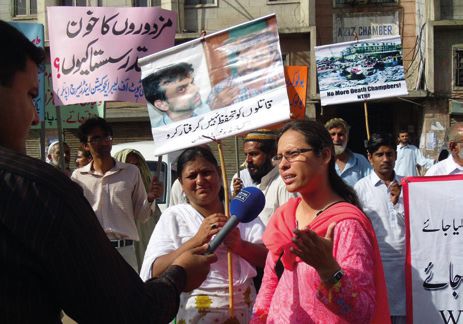
The connection between German textile firms and factory fires in Asia. The cheap jeans, t-shirts or shoes here come at a high price to workers in Asia. As slaves of the global markets, they labour for minimum wage and ruin their health – sometimes even paying with their life. In September 2012, 300 people died in a fire at a textile factory in Karachi (Pakistan), and a few weeks later over 100 people died in a similar incident in Dhaka (Bangladesh). Recently, in May 2013, more than a thousand people died when a factory collapsed in Savar in Bangladesh, where medico partner Gonoshastaya Kendra is active, among other things operating a hospital which, naturally, treated many of the injured. There is method behind tragedies like these, since where workers have virtually no rights, labour and fire protection measures are seen as superfluous. German textile traders also share the guilt in this. For example, the factories in Dhaka and Karachi produce clothing for the German market on commissions for C&A and KiK. This is why medico not only supports its local partners, such as the 'Workers Right Movement' in Pakistan, in their struggle for compensation (with some success), but also works with the Clean Clothes Campaign and the European Centre for Constitutional and Human Rights (ECCHR) to exert public pressure on companies in Germany to push for fundamental improvements in working conditions, and full recognition of the freedom to engage in trade union work.
Top down, North to South
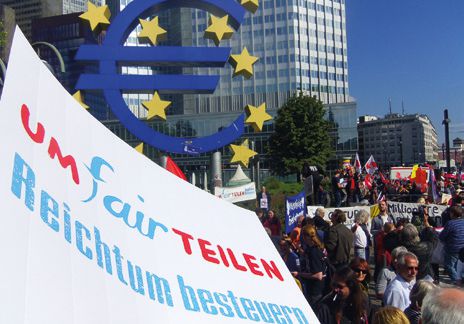
medico brings a global perspective to the 'UmFAIRteilen' campaign. The gap is growing – both between rich and poor in Germany and globally between North and South. In figures, 1% of the richest Germans own over 35% of total wealth, while half the population own virtually nothing. The richest ten million people in the world own assets corresponding to around 55% of total annual global output. This growing divide is the result of the same neoliberal agenda which is also driving up state debt. The best crisis-, social- and economic-policy is redistribution from top to bottom. The campaign alliance 'UmFAIRteilen – Reichtum besteuern' ('Redistribute – tax the wealth') in which social alliances, trade unions, youth and migrant organisations, Attac and medico are involved, is pressing for redistributive measures. medico and Attac are also addressing the global issue, and supporting social movements worldwide which are working for redistribution. To get a hearing for the demand, medico also participated in the German national day of action on 29 September 2012.
Global health
In July 2012, the third People's Health Assembly was held in Cape Town Since its formation in 2000, the People's Health Movement (PHM) has developed into a network of grassroots initiatives, civil society organisations and academic institutes from all over the world as a central hub in the critical health debate. In July 2012, hundreds of activists in this global bottom-up health movement gathered at the third People's Health Assembly in Cape Town. medico supports the work of PHM in many areas, from production of the alternative world health report, through regular summer academies to meetings of grassroots initiatives. In 2012 one focus of promotion was on the regional networking of PHM circles south of the Sahara. The success of this work was apparent in Cape Town, where there was a visible increase in participants and initiatives from these countries which are newly associated with PHM.
Speaking up
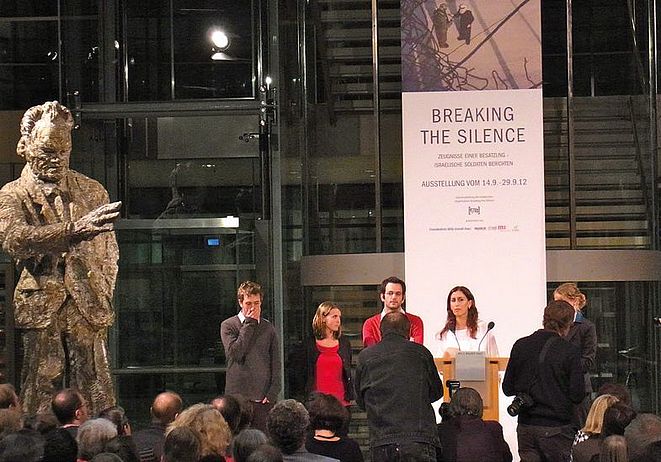
The exhibition 'Breaking the Silence' presents the humiliation of everyday life in the occupied Palestinian territories. For over 45 years, Israeli soldiers have patrolled the alleys of Hebron and other Palestinian towns at night. They impose curfews and force their way into private houses. At home, however, they say little about their experiences, as most people there do not want to know about the everyday reality of the occupation and what their own army is doing. This is where the work of medico partner 'Breaking the Silence' begins. The organisation of Israeli reservists who served in the occupied areas collects and publishes eyewitness accounts, breaking the silence on this subject in Israeli society. 'Once you set foot as a soldier in the occupied territories, it's as if you've tossed your ethics in a grinder – after a minute, there's nothing left,' says Yehuda Saul, one of the organisation's founders. In September medico brought these many-faceted testimonials to Germany. Together with the 'Freundeskreis Willy-Brandt-Haus e.V', the 'Evangelischer Entwicklungsdienst' (EED), Misereor and 'Die Schwelle', medico presented the photographic exhibition 'Breaking the Silence' in the Willy-Brandt-Haus. There were several thousand visitors, with extremely broad media coverage. The book with the same name was published in a German translation in parallel with the exhibition.