
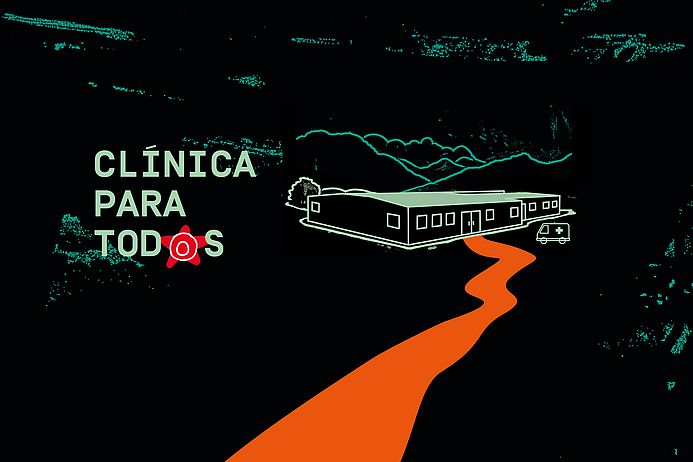
Health is a human right – one that many are denied. In the south of Mexico, a region marked by poverty and racism, the precarious living conditions are also mirrored in the public healthcare system: a shortage of specialists, long waiting times for appointments, an inadequate supply of medicines, outdated infrastructure and not enough clinics in the rural areas of Chiapas.
Language barriers in Chiapas, where the population is predominantly indigenous, lead to illnesses often not being diagnosed correctly. medico’s partners report extremely serious, and in some cases fatal, errors in treatment, including in cases of minor illnesses. Especially in the event of complications during childbirth and pregnancy, this results in heightened maternal and infant mortality.
The Zapatista movement has been rebelling against this since 1994 - fighting for a good life, dignity and justice. Alongside the education system, food production and public administration, healthcare is one of the pillars of Zapatista autonomy:
For over 30 years, the Zapatista movement has been trying to bridge the healthcare gap with its own healthcare system, which operates largely independently from the state. Their health centres provide basic healthcare to those who have no access to state facilities or who face discrimination there. As these are not just residents of the Zapatista communities, their facilities are open to everyone in the region – irrespective of whether they are part of the Zapatista movement or not.
This openness is also reflected in the Zapatistas’ view of communal property and as such is representative of their vision for society and comes through in their new political proposal for ‘The Common’ (El Común). The Zapatistas now define parts of their territory as the ‘Common’, as non-property and as such as free communal land, which must be protected from destruction and should serve only the local population.
A clinic in the rainforest
To expand their autonomy and improve healthcare for the people, the Zapatista communities have started building their own clinic in the heart of the rainforest: gynaecology, laboratory facilities and dental care. The clinic aims to improve healthcare for all people in Chiapas who, for racist or other reasons, do not have access to the state healthcare system. As the clinic is seen as a community project, the Zapatistas have even succeeded in involving communities that are not part of the movement in building it.
So whilst a sense of powerlessness and paralysis is spreading in many places given the state of the world, the clinic shows that resistance can be concrete and more than just an abstract hope. It makes it conceivable to build care infrastructure based on self-determination and collectiveness: self-determined because each person can decide for themselves what is best for them; and collective because it is based on shared responsibility.
medico is supporting the building and equipping of the clinic – including medical equipment and medicines. We are also supporting the training of health promoters and nursing staff in the fields of general medicine, sexual and reproductive health, dental health, laboratory work and traditional medicine. Whilst in many parts of the world we face a sense of powerlessness and paralysis given the current global situation, Zapatista autonomy provides more than just abstract hope.
